A boiler outage rarely begins with a burst tube and a siren. More often, it starts months earlier with a grade copied from an old job, a wall thickness trimmed to hit budget, or a material selected around design pressure while steam temperature, deposits, cycling, and sootblower erosion were barely discussed. We have seen that pattern too many times in utility boilers, package units, HRSGs, and captive power plants.
When buyers ask us why one set of boiler tubes runs for years while another struggles through repeated leaks, the answer is usually not a single number on a datasheet. It is the fit between material, manufacturing route, dimensional control, heat treatment, and the real service environment. Good tube selection is practical engineering, not catalog shopping.
Boiler tubes perform best when the spec starts with actual service duty
The first question we ask is not, “What grade did the last project use?” It is, “What is this tube expected to survive?” Economizer tubes, waterwall tubes, screen tubes, superheater tubes, and reheater tubes may all sit in one boiler, but their damage mechanisms are very different. Waterwalls often see high heat flux, under-deposit corrosion, and local thermal cycling. Superheaters and reheaters are usually governed by creep strength, steam-side oxidation, and fireside corrosion at elevated metal temperatures. In biomass and waste-to-energy service, chloride and alkali deposits can change the material conversation very quickly.
Standards give the framework, but service conditions determine whether the framework is enough. Common starting points are ASTM A192 / ASME SA-192 for seamless carbon steel boiler tubes, ASTM A210 / ASME SA-210 for medium-carbon seamless tubes, and ASTM A213 / ASME SA-213 for ferritic and austenitic alloy-steel tubes. Those specifications matter, but they do not replace a proper review of maximum tube metal temperature, startup frequency, fuel ash chemistry, flue gas velocity, and water treatment regime. A tube that is acceptable in a gas-fired package boiler may be a poor choice in a coal, petcoke, or biomass unit.
We advise customers to design around the harshest credible condition, not the average operating point. Upsets, load swings, burner imbalance, poor sootblower alignment, or temporary water chemistry excursions are what shorten life. If the plant cycles daily, thermal fatigue deserves as much attention as pressure. If ash loading is high, external wastage and erosion-corrosion may dominate over creep. That is why a reliable boiler tube specification always starts in the boiler, not in the purchasing file.
Customers from the Gulf typically ask about this before placing their first PO.
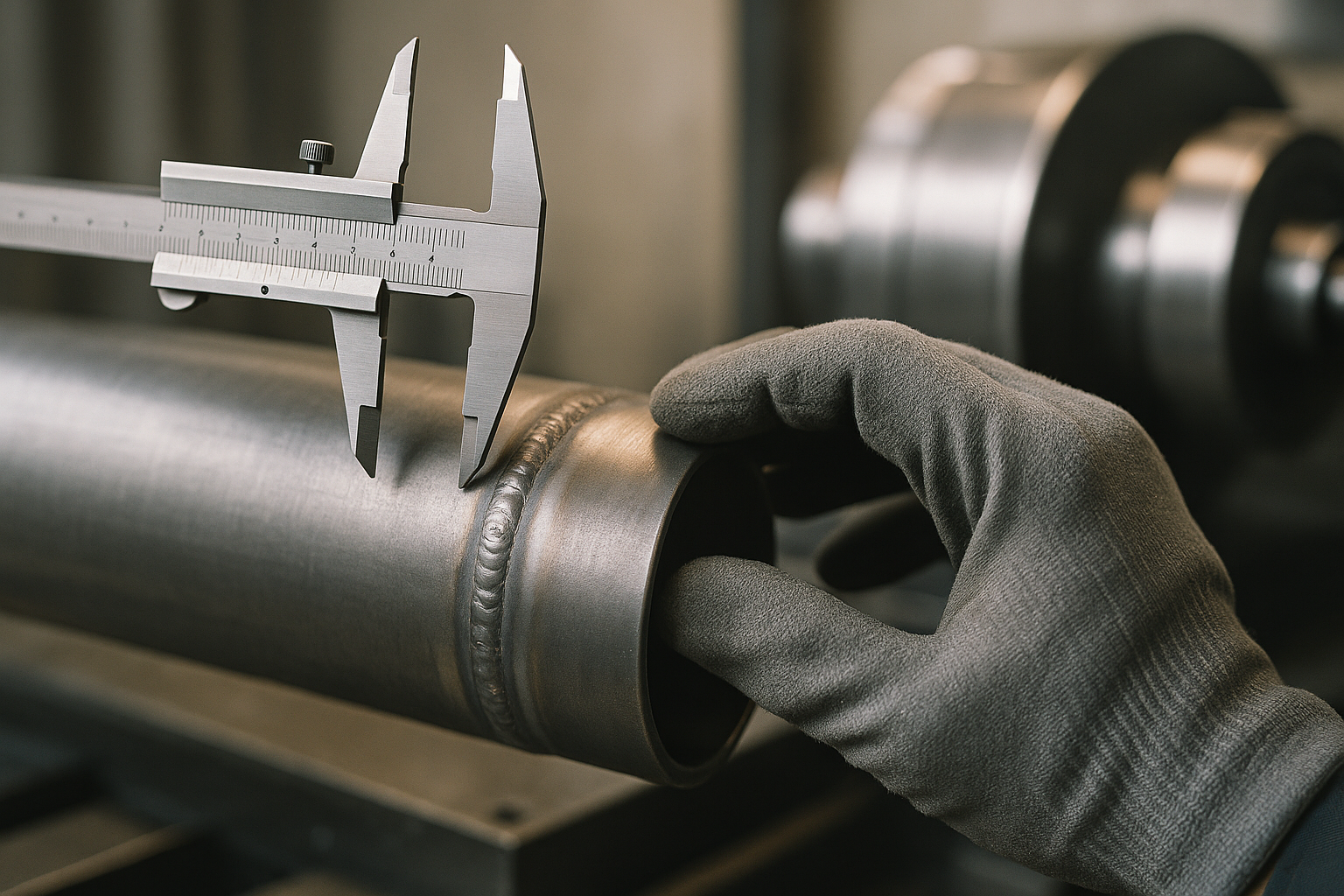
Match the material family to temperature, creep, and corrosion risk
Carbon steel remains the right answer in many sections of a boiler. SA-192 seamless carbon steel tubes are widely used for high-pressure service where temperatures remain moderate and water chemistry is controlled. SA-210 Grade A1 and Grade C offer higher strength and are commonly specified for economizers, waterwalls, and certain lower-temperature superheater duties. They are economical, easy to bend and weld, and generally available in a broad size range. For the right duty, they deliver excellent value.
The mistake is stretching carbon steel into service where creep and oxidation become the governing failure modes. Once tube metal temperatures rise, low-alloy chromium-molybdenum grades earn their cost. SA-213 T11 and T22 are the established workhorses for many superheater and reheater applications. T11, approximately 1.25Cr-0.5Mo, provides a useful step up from carbon steel. T22, around 2.25Cr-1Mo, offers better creep resistance and oxidation performance and is often selected where temperatures and design lives are more demanding. In higher-temperature sections, grades such as T23, T91, or austenitic stainless options may enter the discussion, but fabrication and welding controls become more stringent.
Corrosion risk can be just as decisive as temperature. High-sulfur fuels, chloride-bearing deposits, reducing atmospheres, and aggressive sootblower patterns all influence grade choice. For example, a tube with adequate creep strength can still fail early from fireside sulfidation or steam-side scale exfoliation. That is why we do not recommend selecting a grade by pressure class alone. The right boiler tube material balances creep strength, oxidation resistance, weldability, fabrication complexity, and the actual chemistry on both sides of the tube wall.
Wall thickness and dimensional control buy real operating margin
We have seen buyers focus heavily on grade while treating dimensions as a commodity. In service, that is a costly shortcut. Boiler tubes live or die by actual minimum wall, outside diameter control, eccentricity, ovality, and bend performance. A tube that is nominally compliant but drifts toward thin-wall tolerance can lose corrosion allowance, reduce remaining life under erosion, and create stress concentrations in bent sections. Tight dimensional control is not a paperwork issue; it is operating margin.
For seamless boiler tubes, the governing standards typically define chemistry, tensile properties, flattening or flaring requirements, hydrostatic or nondestructive test options, and dimensional tolerances. But plants with severe duty often need tighter internal requirements than the base ASTM or ASME minimums. We regularly discuss enhanced controls on wall tolerance, concentricity, straightness, and surface condition, especially for high-pressure and high-temperature circuits. In reheater and superheater coils, even small dimensional variation can complicate fit-up, affect heat transfer consistency, and influence long-term creep behavior.
Engineering note from our metallurgist: the ASTM minimum isn't the same as the practical minimum.
Wall thickness should be set against more than design pressure. It must account for corrosion allowance, expected erosion, fabrication thinning through bending, and inspection strategy over the service life. If the unit is known for fly ash erosion at turns or sootblower impact, adding a little metal in the right place can be far cheaper than repeated outages. The lowest initial tube price often disappears after the first forced shutdown.
Manufacturing route, heat treatment, and testing separate durable tubes from risky ones
For most boiler applications, seamless tubes remain the standard because they offer uniform structure and avoid weld seam concerns in demanding pressure service. But “seamless” by itself is not a quality guarantee. Steelmaking practice, piercing and rolling control, normalizing or normalizing-and-tempering cycles, surface conditioning, and final inspection all affect the consistency of the product. Alloy grades such as T11, T22, and especially higher-alloy materials are sensitive to heat treatment discipline. If the microstructure is wrong, the tube may meet paperwork requirements and still disappoint in service.
Testing should align with the risk profile of the project. Depending on specification, that may include hydrostatic testing, eddy current testing, ultrasonic examination, hardness checks, flattening, flaring, grain size review, and full traceability to heat number. For critical service, buyers often request PMI, metallography, inclusion control, or supplementary NDE. In ASME code work, documentation quality matters just as much as the tube itself. Mill test certificates must clearly tie chemistry, mechanical properties, heat treatment condition, dimensions, and test results back to each lot.
Where the end use is especially demanding, project requirements may also reference NORSOK expectations for material control and documentation discipline, even outside offshore service. We support that mindset. A strong inspection plan reduces ambiguity before the tubes are bent, welded, and installed. Once a boiler is online, discovering a material mix-up or heat treatment issue is a very expensive way to learn what should have been verified at the mill.
Selection gets easier when you use a practical screening checklist
Most bad tube decisions are not made because engineers lack standards knowledge. They happen because the team is moving fast, the old spec looks familiar, and no one forces a structured review of the actual duty. We recommend a simple screening process before finalizing any boiler tube purchase. It keeps the conversation grounded in service conditions instead of assumptions and helps purchasing, engineering, and maintenance work from the same facts.
Our Pune mill runs three shifts to keep these tolerances.
The checklist below is where we usually start with customers evaluating replacement bundles, new boiler circuits, or life-extension projects. It is not theoretical. It reflects the failure patterns we see most often in the field: wrong grade for tube metal temperature, inadequate wall for erosion allowance, poor chemistry control, and insufficient inspection requirements for critical service.
- Define the duty by location: economizer, waterwall, platen superheater, final superheater, reheater, screen, or generating bank.
- Confirm maximum tube metal temperature: do not rely only on steam temperature; local heat flux and upset conditions matter.
- Review fuel and deposit chemistry: sulfur, chlorides, alkalis, vanadium, and ash loading can shift the material choice.
- Set wall thickness with allowance: include corrosion, erosion, bend thinning, and inspection interval expectations.
- Choose the right standard and grade: SA-192, SA-210 A1/C, SA-213 T11, T22, T23, T91, or stainless where justified.
- Specify manufacturing and testing clearly: seamless route, heat treatment condition, hydro or NDT, PMI if required, and full MTC traceability.
- Check fabrication compatibility: bending radius, weld procedure qualification, PWHT requirements, and field repair practicality.
One more point deserves emphasis: replacement strategy matters. If a plant repeatedly changes only failed spots without addressing the underlying mismatch between material and duty, the outage pattern usually continues. Sometimes the most economical decision is a targeted upgrade from carbon steel to a low-alloy grade in the hottest or most erosive sections, rather than a full-system material change.
Lifecycle cost beats purchase price when outages are expensive
Procurement teams are often pushed to compare boiler tubes on unit price, and we understand why. But in operating plants, the real cost sits in downtime, scaffolding, labor, refractory disturbance, startup losses, and the knock-on effect on steam users or power export. A cheaper tube that lasts half as long is rarely cheaper in any meaningful plant accounting. This is especially true in units with difficult access or high outage penalties.
We encourage customers to compare options on installed life, not just delivered cost. A move from SA-210 to SA-213 T11 or T22 in the right section may increase upfront spend, but if it reduces leak frequency, extends inspection intervals, and improves 0% claim rate on 2024-2025 nuclear-spec shipments through cycling service, the payback is often straightforward. The same logic applies to tighter dimensional tolerances or stronger supplementary inspection. Those line items can look optional during purchasing and essential after the first forced outage.
In our experience, the best-performing boiler tube programs are built jointly by engineering, operations, and procurement. Engineering defines the real duty and failure mechanisms. Operations contributes startup patterns, sootblower behavior, and deposit history. Procurement locks in the grade, dimensions, testing, and traceability so the delivered product matches the intent. That coordination is what turns a tube order into a reliable service-life result.
We've shipped to over 50 countries, and the recurring question is exactly this.
Key Takeaways
Reliable boiler tube performance comes from matching the tube to the actual plant environment, then controlling quality all the way from mill to installation. The strongest specifications are specific about duty, damage mechanisms, dimensions, and inspection.
- Start with real service conditions: tube metal temperature, cycling, fuel ash chemistry, water treatment, and erosion pattern.
- Use carbon steel where it fits, but move to low-alloy grades such as SA-213 T11 or T22 when creep and oxidation justify the upgrade.
- Do not treat wall thickness and tolerances as commodity details; they directly affect remaining life and outage risk.
- Specify seamless manufacturing, heat treatment, testing, and traceability clearly so the delivered boiler tubes match the duty.